
Last updated: October 2026
Rolex, Patek Philippe, Audemars Piguet, Vacheron Constantin, Cartier and Richard Mille. What separates them, and which one is right for you.
Most people arrive at luxury watches through a single brand. Usually Rolex, occasionally Cartier, sometimes because of a watch a parent wore. Then the question widens: what else is out there, and is any of it better?
The answer is that "better" stops being useful at this level. Every brand in this guide produces watches that will outlast you. What separates them is philosophy, and understanding those philosophies is how you work out which one matches the way you actually live. This guide covers the six houses that matter most in the current market, what each one does differently, and where they sit on price.
A few numbers before you start:
- Rolex produces roughly 1,000,000 watches a year; Patek Philippe makes about 70,000; Richard Mille stays under 5,000 across the entire brand
- The "Holy Trinity" means Patek Philippe, Audemars Piguet and Vacheron Constantin — Rolex isn't part of it, which is about finishing depth, not quality
- Entry points range from under $5,000 (Cartier Tank Must) to upwards of $100,000 (Richard Mille)
- Rolex's Superlative Chronometer certification tests to roughly twice the strictness of standard Swiss chronometer certification
- Steel sports models outperform precious metal dress watches on resale across every brand in this guide
In this guide:
- What is the "Holy Trinity" of watchmaking?
- What is Rolex known for?
- What is Patek Philippe known for?
- What is Audemars Piguet known for?
- What is Vacheron Constantin known for?
- What is Cartier known for?
- What is Richard Mille known for?
- Which luxury watch brand should you buy?
- Do different brands hold their value differently?
- Where should you buy?
What is the "Holy Trinity" of watchmaking?
The Holy Trinity refers to Patek Philippe, Audemars Piguet and Vacheron Constantin, the three Swiss houses traditionally regarded as the pinnacle of haute horlogerie.
The grouping is informal but genuinely meaningful. All three have unbroken production histories stretching back to the 19th century or earlier. All three finish movements by hand to a standard that very few manufactures can approach. All three produce grand complications: perpetual calendars, minute repeaters, split-seconds chronographs, tourbillons. And all three constrain production deliberately rather than scaling to meet demand.
Rolex is not part of the Trinity, which surprises people given it's the most recognized watch brand on earth. The distinction isn't about quality. Rolex produces roughly a million watches a year to a consistency no other brand can match, which is an extraordinary industrial achievement. But the Trinity designation specifically concerns hand-finishing and complication depth, and that's a different pursuit.
Worth knowing: the Trinity framing is a 20th century convention and some collectors now argue for a wider grouping that includes independents like F.P. Journe or A. Lange & Söhne. Treat it as useful shorthand rather than a settled hierarchy.
Further reading: Vacheron Constantin vs Patek Philippe, and Rolex vs Patek Philippe.
What is Rolex known for?
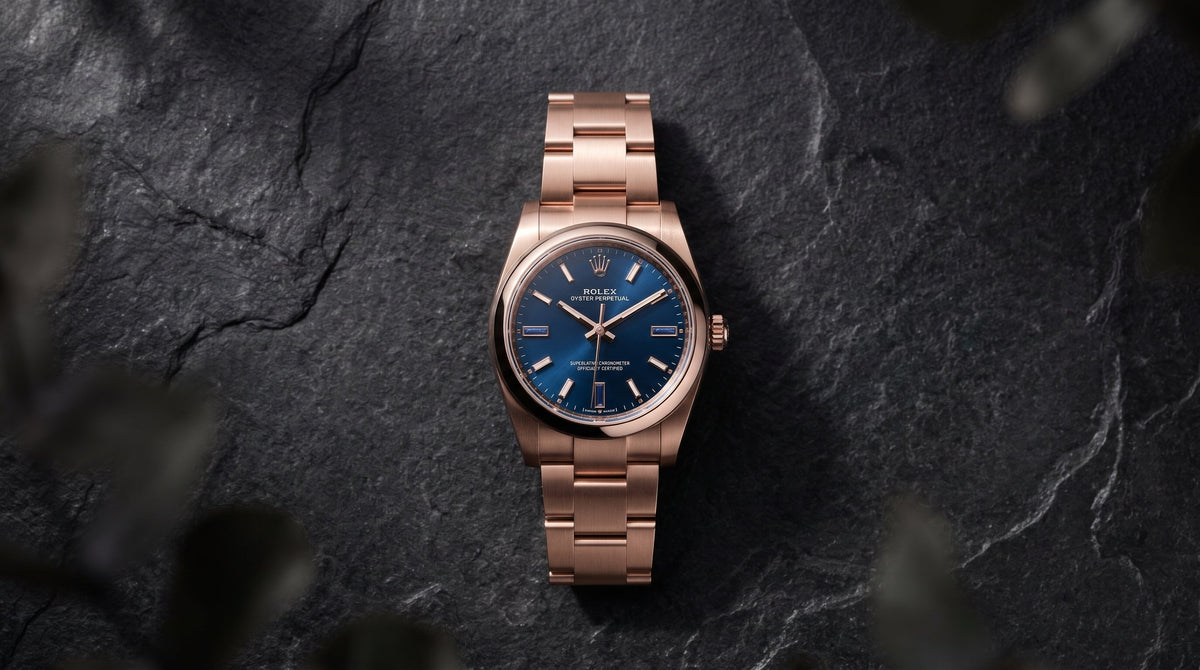
Rolex is known for precision, durability and universal recognition. It manufactures almost every component in-house and tests every movement to a standard roughly twice as strict as official Swiss chronometer certification.
The specifics are genuinely impressive. Rolex uses Oystersteel, its designation for 904L stainless steel, which is harder and more corrosion-resistant than the 316L used across most of the industry and considerably more difficult to machine. Every movement carries Superlative Chronometer certification, guaranteeing +2 to -2 seconds per day. Current calibers deliver 70-hour power reserves.

The Oyster case, patented by Hans Wilsdorf in 1926 and celebrating its centenary this year, remains the foundation of nearly every watch the brand makes. It was the first genuinely waterproof wristwatch case and it's arguably the most important invention in the history of the wristwatch.
Where Rolex differs from the Trinity is in approach. Movements are sealed behind solid casebacks, with the sole exception of the 1908. The finishing is clean and functional rather than decorative, because Rolex's position is that a movement serves the wearer rather than being displayed to them.
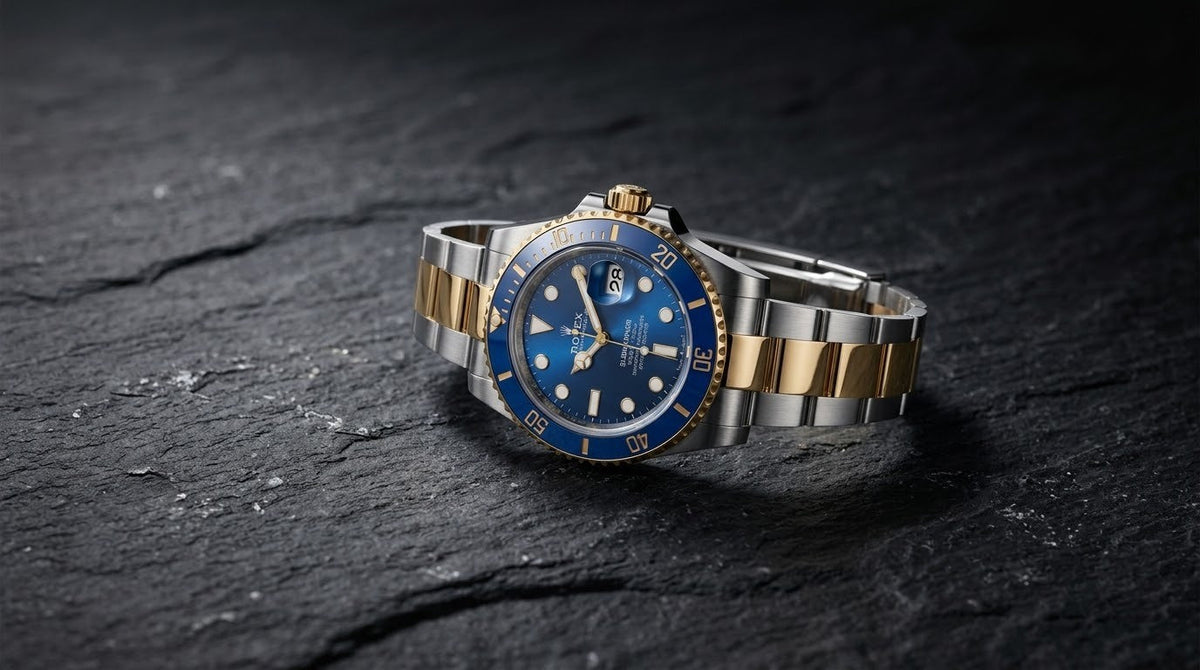
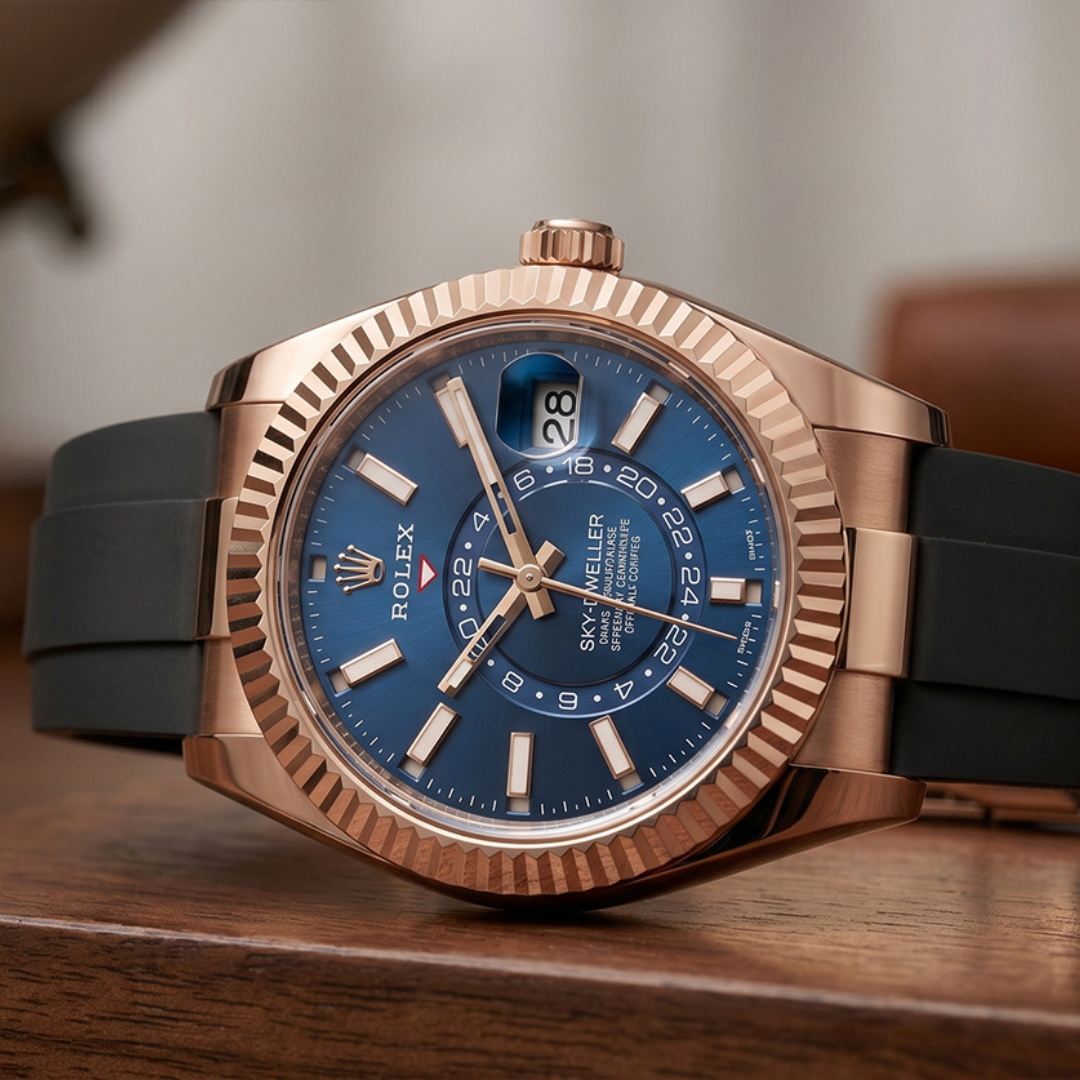
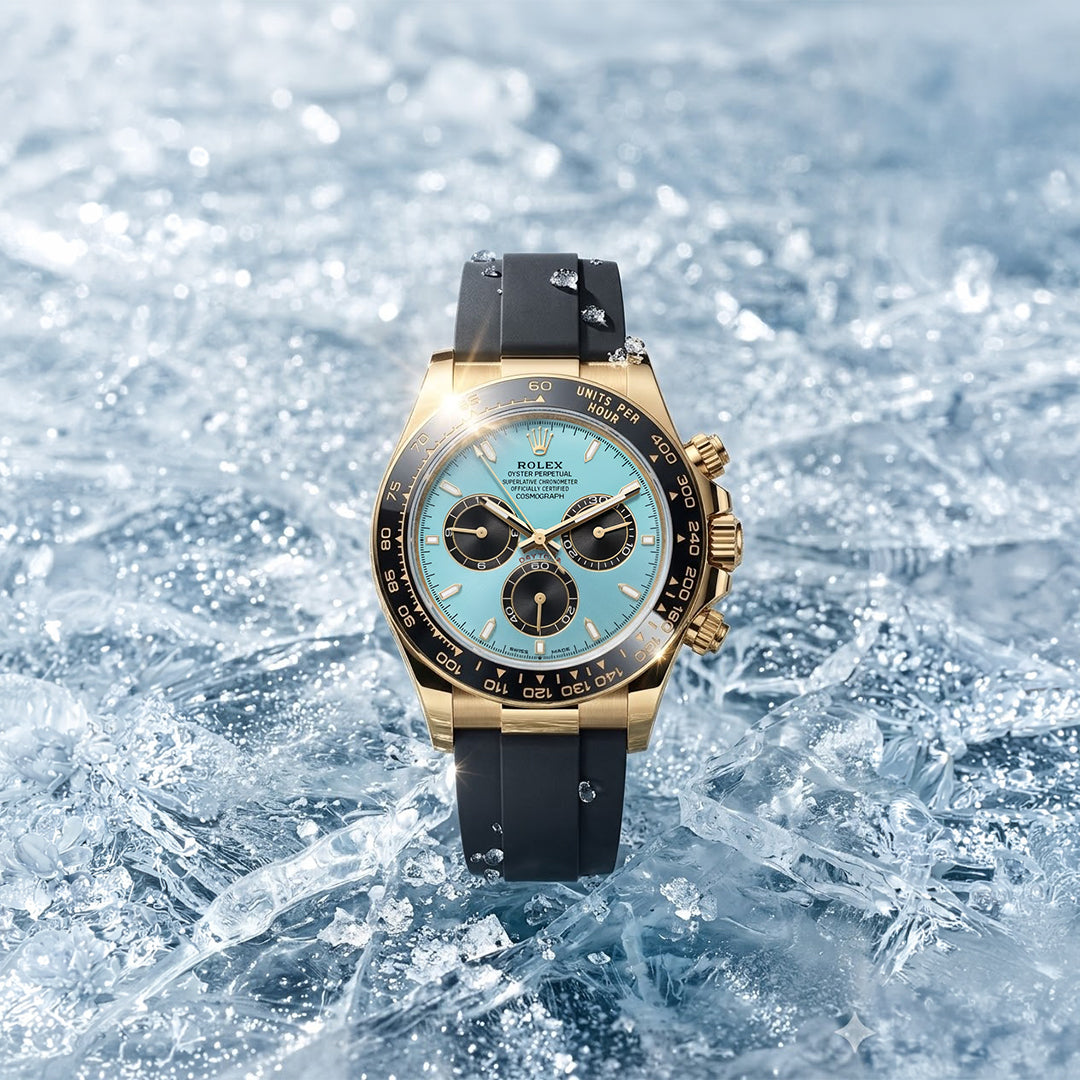
Key collections: Submariner, GMT-Master II, Daytona, Explorer, Sky-Dweller, Datejust, Day-Date, 1908.
Entry point: Oyster Perpetual, around $7,000.
What it's best for: The buyer who wants a watch engineered to survive anything, backed by the most liquid secondary market in watchmaking.
Further reading: the complete Rolex buying guide.
What is Patek Philippe known for?

Patek Philippe is known for hand-finished movements, extreme scarcity and the strongest auction record of any watch brand. It's also the last major Swiss manufacture still family-owned and independent.
Founded in 1839 and controlled by the Stern family since 1932, Patek produces roughly 70,000 watches a year, a fraction of Rolex's output. Every movement carries the Patek Philippe Seal, the brand's own quality standard introduced in 2009, which exceeds the Geneva Seal and governs the entire watch rather than just the movement.
The finishing is where Patek separates itself. Hand-beveled bridges, mirror-polished screw heads, decorative patterns executed to a precision visible only under magnification. Many models feature display casebacks specifically so you can see it.
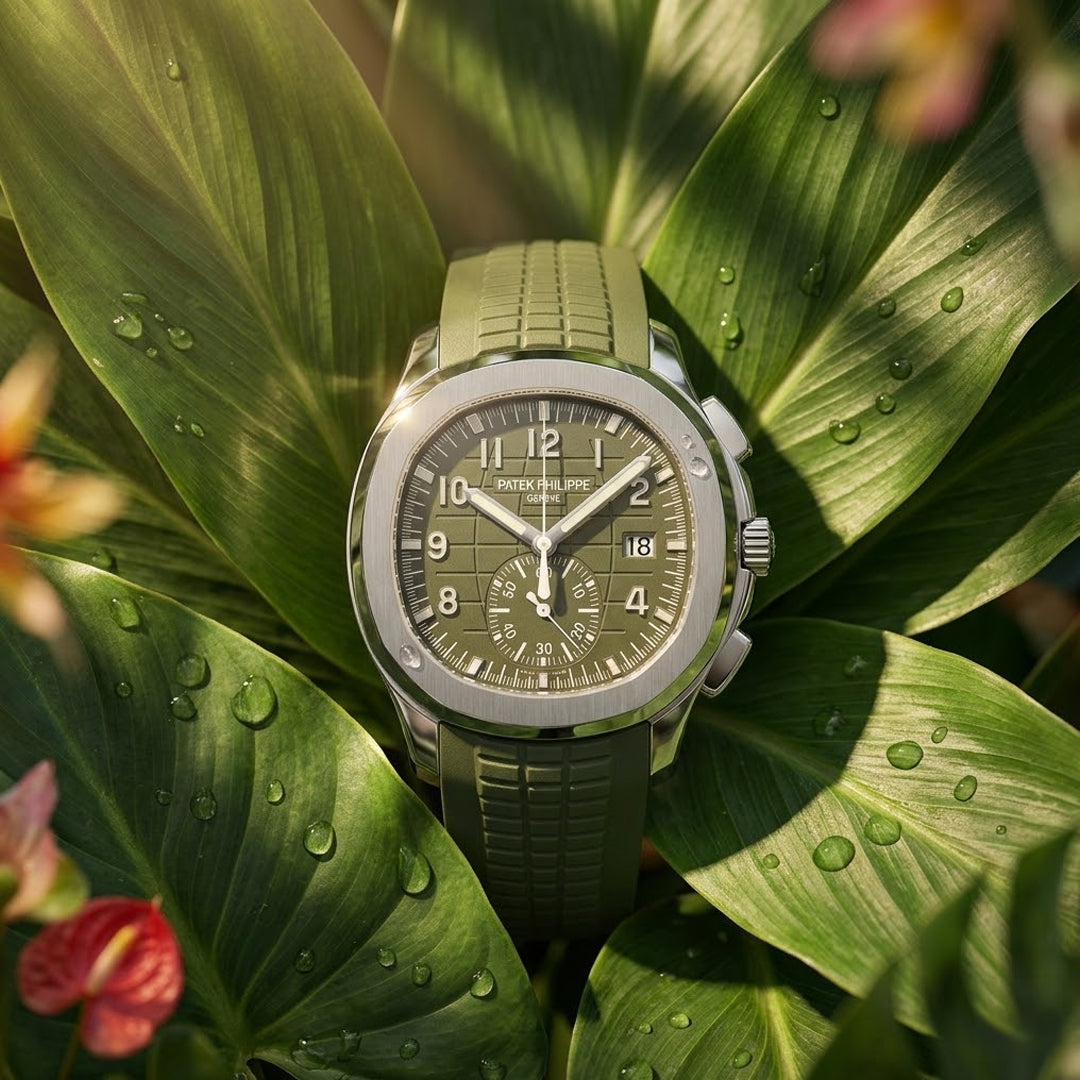
The brand's identity rests on two pillars. The Calatrava, launched in 1932, is the definitive round dress watch. The Nautilus, designed by Gerald Genta in 1976 and celebrating its 50th anniversary this year, changed what a luxury sports watch could be. The Aquanaut followed in 1997 as a more relaxed interpretation, and the Cubitus arrived recently as the brand's first new collection in decades.
Philippe Stern, who led the company through the quartz crisis and refused repeated opportunities to sell to a conglomerate, died in June this year. His decision to double down on mechanical watchmaking when the industry was abandoning it is the reason the Patek we know today exists.
Key collections: Nautilus, Aquanaut, Calatrava, Complications, Grand Complications, Cubitus.
Entry point: Calatrava, upwards of $25,000.
What it's best for: The buyer who wants the finest hand-finishing available and a watch with generational prestige.
What is Audemars Piguet known for?

Audemars Piguet is known for the Royal Oak, the watch that invented the luxury sports watch category, and for case finishing that no competitor has successfully replicated.
Gerald Genta designed the Royal Oak overnight in 1972, reportedly sketching it the evening before the Basel fair. A stainless steel sports watch priced above gold dress watches was close to scandalous at the time. Fifty-four years later it's one of the most architecturally significant watches ever made.
The genius isn't the octagonal bezel and exposed screws, striking as they are. It's the finishing. Alternating brushed and polished surfaces across the case and integrated bracelet create a play of light that photographs cannot capture. You have to see it on a wrist to understand why it commands what it does.
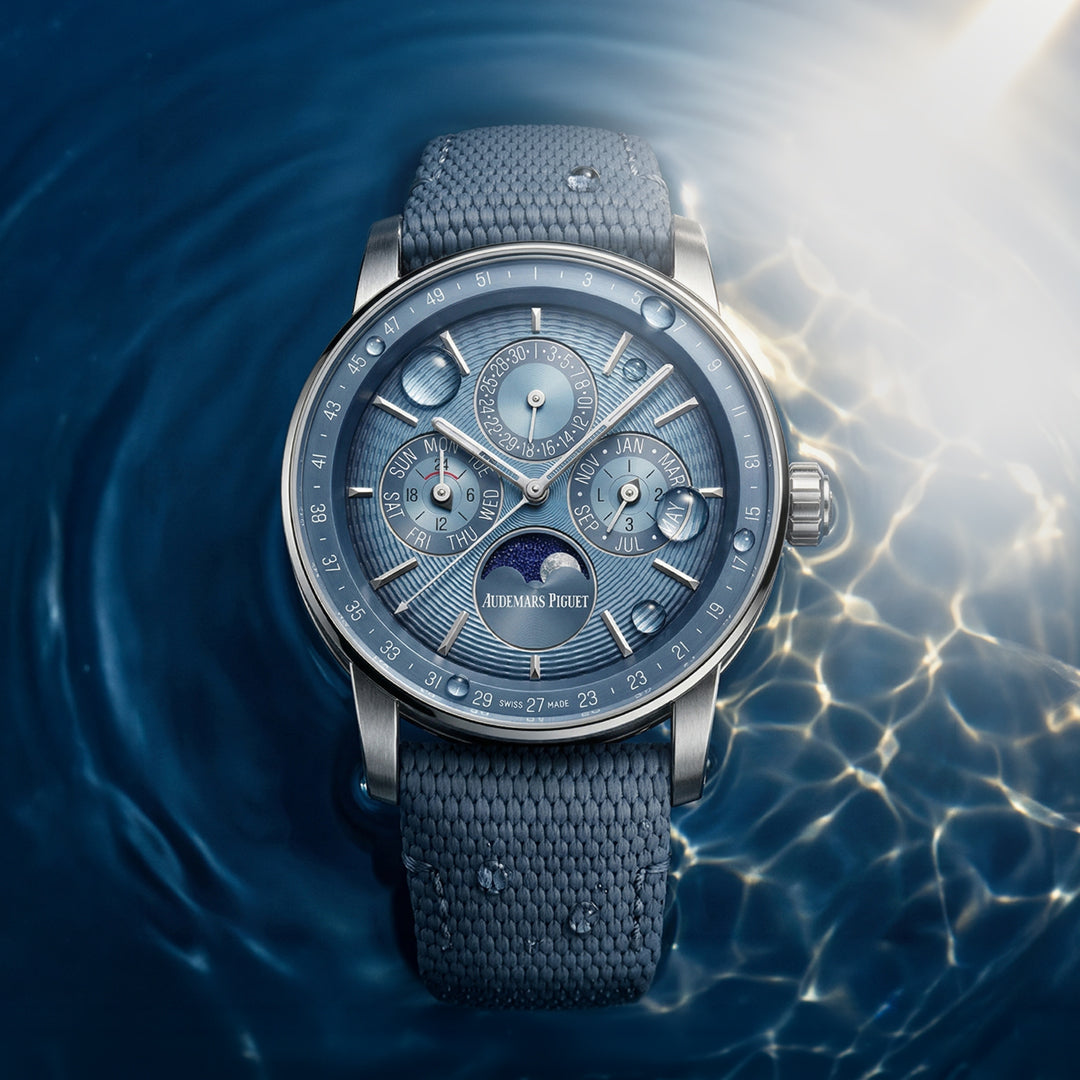
The Royal Oak Offshore arrived in 1993 as a deliberately bolder interpretation, larger and more aggressive, and divided opinion from the start. The Code 11.59 launched in 2019 to widespread ridicule, then quietly won over sceptics and took the Aiguille d'Or at the Grand Prix d'Horlogerie de Genève in 2023 for the Ultra-Complication Universelle.
AP remains independent and family-controlled, producing roughly 50,000 watches annually.
Key collections: Royal Oak, Royal Oak Offshore, Code 11.59.
Entry point: Code 11.59 or a pre-owned Royal Oak, from around $20,000.
What it's best for: The buyer who wants architectural design and case finishing at the absolute top of the industry.
Further reading: Royal Oak vs Royal Oak Offshore, and the case for the Code 11.59.
What is Vacheron Constantin known for?
Vacheron Constantin is the oldest continuously operating watch manufacture in the world, founded in 1755, and is known for stylistic breadth and exceptional artisanal dial work.

Where Patek's identity is focused and Rolex's is consistent, Vacheron's range is deliberately wide. The Overseas is the luxury sports watch, and one of the best-executed in the category thanks to an interchangeable strap system that includes bracelet, leather and rubber in the box. The Patrimony is the dress watch, impossibly thin and restrained. The Traditionnelle houses the serious complications. The Historiques line revisits archive designs.
Then there's Métiers d'Art, where Vacheron produces some of the most extraordinary decorated dials in watchmaking: hand-engraving, enamelling, guilloché and gem-setting executed at a level that sits closer to wearable art than conventional watchmaking. Les Cabinotiers goes further still, producing bespoke one-off pieces to client commission, something no other Trinity house offers at the same scale.
Movements carry the Hallmark of Geneva, an independent certification governing both finishing quality and long-term reliability.
Key collections: Overseas, Patrimony, Traditionnelle, Historiques, Métiers d'Art, Les Cabinotiers.
Entry point: Patrimony or a pre-owned Overseas, from around $25,000.
What it's best for: The buyer who values artistic range and 270 years of unbroken heritage over the loudest name in the room.
Further reading: Vacheron Constantin vs Patek Philippe.
What is Cartier known for?
Cartier is known for design-led watchmaking and for producing one of the first purpose-built wristwatches in history, the Santos, in 1904.

The watch community spent decades dismissing Cartier as a jeweler that happened to make watches. That framing was always reductive and it's now untenable. The Santos was designed for the aviator Alberto Santos-Dumont because checking a pocket watch mid-flight was impractical, which makes it a genuine tool watch that predates the Submariner by half a century.
Cartier's approach inverts the usual order. Shape comes first and the movement serves it. The Tank is a rectangle, inspired by the overhead profile of a Renault tank on the Western Front in 1917. The Santos is a square with exposed screws. The Ballon Bleu is a circle with a cabochon crown set flush into the case. Every Cartier starts as a visual idea.
The brand produces in-house movements for its core collections, including the caliber 1847 MC in the Santos, and the SmartLink bracelet system on the current Santos is the best tool-free adjustment mechanism in the industry.
Market momentum has shifted significantly in Cartier's favor over the past two years, with Santos and Tank references showing steadily improving secondary market values as buyers move toward design distinction over pure hype.
Key collections: Santos, Tank, Ballon Bleu, Panthère, Crash.
Entry point: Tank Must, under $5,000. Santos medium, under $10,000.
What it's best for: The buyer who wants unmistakable design and genuine heritage at a price point that undercuts every other brand here.
What is Richard Mille known for?
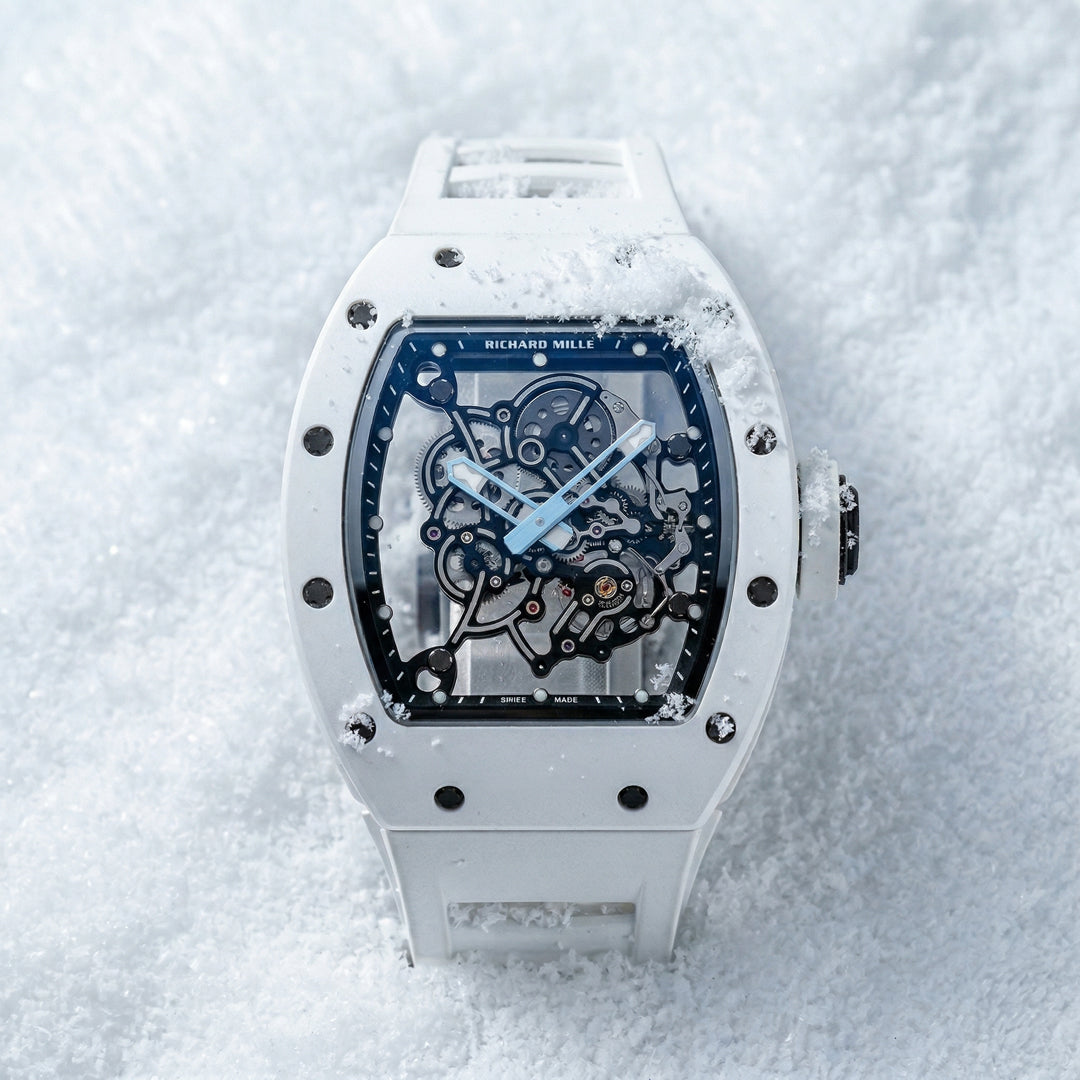
Richard Mille is known for extreme materials engineering, tiny production volumes and prices that start in the high six figures.
The brand is polarizing and makes no attempt not to be. Cases are built from Carbon TPT, Quartz TPT, grade 5 titanium and ceramic composites, materials borrowed from Formula 1 and aerospace. Movements are skeletonized not for display but to reduce mass, with baseplates and bridges machined from titanium or carbon rather than brass.
The engineering claims hold up. The RM 27-04, built for Rafael Nadal, survives accelerations above 12,000 Gs in a tourbillon movement weighing less than a coin. Whether a wristwatch needs to do that is a fair question. That Richard Mille is one of very few houses capable of building it is not in dispute.
Production sits below 5,000 pieces annually across the entire brand, which creates secondary market dynamics unlike anything else in watchmaking. Sought-after references appreciate rapidly and oversupply is effectively impossible.

Key collections: RM 011, RM 035, RM 027, and a wide range of limited editions.
Entry point: Upwards of $100,000.
What it's best for: The collector who has moved past conventional watchmaking and wants materials science at the edge of what's possible.
Further reading: why Richard Mille watches cost what they do.
Which luxury watch brand should you buy?
The right brand depends on what you value: engineering, finishing, design, or innovation. Price tiers narrow the field considerably.
Under $10,000. Cartier is the strongest option at this level, with the Tank Must starting under $5,000 and the Santos medium under $10,000. Rolex becomes accessible here too, with the Oyster Perpetual and Datejust 36 both sitting in range.
$10,000 to $20,000. Rolex sports models occupy this bracket, including the Submariner, GMT-Master II and Daytona at retail, though secondary market premiums apply. Pre-owned Audemars Piguet Code 11.59 references also fall here, and represent some of the best value in haute horlogerie right now.
$20,000 to $50,000. Vacheron Constantin Patrimony and Overseas, Patek Philippe Calatrava and Aquanaut, and Royal Oak references on the secondary market. Precious metal Rolex models including the Day-Date also sit in this range, and frequently trade at or below retail pre-owned.
$50,000 and above. Patek Philippe Nautilus, Audemars Piguet complications, Vacheron Constantin Traditionnelle and Métiers d'Art, and the entry tier of Richard Mille.
A practical framing that cuts through brand hierarchy: if you want a watch to survive anything and sell instantly whenever you choose, buy Rolex. If you want the finest hand-finishing available, buy Patek. If you want architectural design, buy AP. If you want artistic range and quiet prestige, buy Vacheron. If you want design distinction at a fraction of the cost, buy Cartier. If you want to see how far materials engineering can be pushed, buy Richard Mille.
Do different brands hold their value differently?
Yes, and significantly. Rolex offers the deepest secondary market liquidity, Patek Philippe the strongest long-term auction performance, and the others sit between those poles.
Rolex steel sports models trade consistently above retail, and the market is liquid enough that selling is straightforward at a predictable price. That liquidity is itself a financial advantage, and no other brand matches it.
Patek Philippe holds value exceptionally well, particularly on Nautilus and Aquanaut references and on complicated pieces at auction. The market is less liquid than Rolex's, with fewer transactions and a more specialized buyer pool, but when a Patek sells well it sells spectacularly.
Audemars Piguet Royal Oak references in steel hold strongly. The Code 11.59 currently trades below retail, which is a perception issue rather than a quality one and arguably represents opportunity.
Vacheron Constantin's Overseas has seen steadily growing demand, while Patrimony and Traditionnelle models can soften from retail before stabilizing. Cartier has improved markedly over the past two years from a historically softer position. Richard Mille appreciates rapidly on desirable references due to extreme scarcity.
One consistent pattern across every brand: steel sports models outperform precious metal dress watches on resale, which means precious metal pieces often represent the better buy on the secondary market.
Further reading: are Rolex watches a good investment in 2026.
Where should you buy?
Buy from an authorized dealer if you have an established relationship and are willing to wait. Otherwise buy from a specialist pre-owned dealer who authenticates every watch and reports condition transparently.
Allocation at authorized dealers is relationship-driven rather than chronological, particularly at Rolex, Patek and AP. The unspoken expectation is a purchase history before you're offered the piece you actually want, which carries a real cost that rarely gets discussed.
The secondary market removes that entirely, and current premiums on most references are modest enough that it's frequently the better-informed decision. It also provides access to discontinued references that cannot be bought new at any price.
What to insist on: full authentication with documentation, macro photography of engravings, clear condition reporting including polish status, transparency on box, papers and service history, and a dealer who answers direct questions without deflecting.
Further reading: the complete guide to buying pre-owned luxury watches.
Dial Society carries Rolex, Patek Philippe, Audemars Piguet, Vacheron Constantin, Cartier and Richard Mille, every piece fully authenticated. Browse the collection or request a specific reference.