
Rolex wins on reliability, universal recognition, and resale liquidity; Patek Philippe wins on hand-finishing, exclusivity, and long-term prestige.
One makes the most recognized watches on earth. The other makes the most revered.
Here’s why comparing them is more useful than you’d think.
This is the comparison that watch people love to argue about, and the one that newcomers always ask. I’ve been on both sides of it. I’ve stood in front of a case holding a Submariner in one hand and a Nautilus in the other, trying to figure out which one represented the “better” purchase. And what I’ve come to understand is that the question itself reveals something important about what you value, which is exactly why it’s worth working through.
Rolex and Patek Philippe are both at the top of watchmaking. But they’re at the top in fundamentally different ways, and understanding those differences will tell you more about what you should buy than any ranking ever could.
What Each Brand Is Actually Selling You
This is the distinction that matters most, and it’s the one that most comparison articles gloss over.
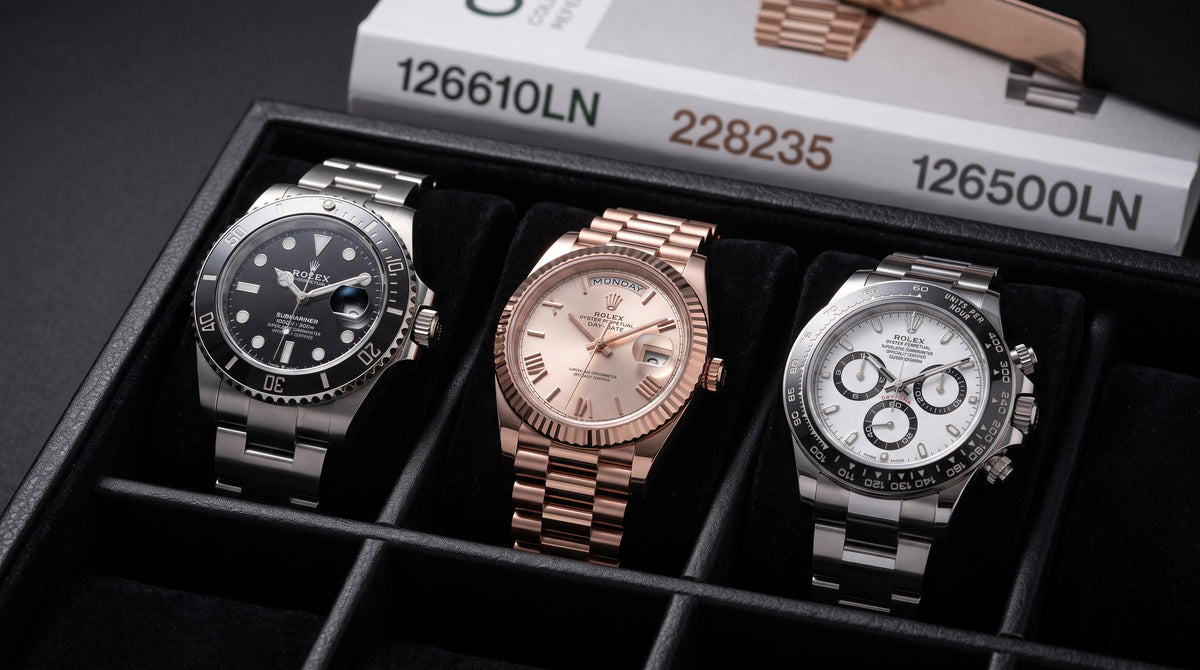
Rolex sells precision, reliability, and universality. Every Rolex is built to the same exacting standard, whether it costs $10,000 or $80,000. The movements are industrially produced to tolerances that would embarrass most competitors. The cases are waterproof, shock-resistant, and designed to survive real-world use for decades. And the brand is recognized everywhere on earth by virtually everyone. A Rolex communicates something instantly, to any audience, in any context.
Patek Philippe sells craft, exclusivity, and legacy. Every Patek movement is finished by hand to a standard that sits at the absolute ceiling of the art. Production is deliberately limited to roughly 70,000 pieces per year. The brand is family-owned, independent, and operates on a timeline measured in generations rather than quarters. A Patek communicates something too, but to a narrower audience: people who understand what they’re looking at.
Neither proposition is superior. But they appeal to fundamentally different instincts. Rolex appeals to the part of you that wants the best-engineered tool for the job. Patek appeals to the part of you that wants to own something crafted at the highest level humans can achieve.
Movements: Industrial Perfection vs. Artisanal Excellence
Rolex manufactures every component of its movements in-house, from the Parachrom hairspring to the Chronergy escapement. The current generation calibres (3200 series, 4100 series) deliver 70-plus hour power reserves and accuracy to +2/-2 seconds per day under the Superlative Chronometer certification. The movements are robust, overbuilt, and designed to run reliably with minimal service for a decade.
What Rolex doesn’t do is invite you to look at them. With the sole exception of the 1908, every Rolex has a solid caseback. The movement is sealed inside, doing its job quietly. Rolex’s philosophy is that the movement serves the wearer, not the other way around.
Patek Philippe takes the opposite approach. Movements carry the Patek Philippe Seal, the brand’s own quality standard that exceeds any external certification. Bridges are hand-beveled. Screw heads are mirror-polished. Decorative finishing (Côtes de Genève, perlage, hand-engraving) is executed to a standard that’s visible under a loupe and breathtaking when you see it. Many Patek models feature display casebacks specifically so you can appreciate what you’re wearing.
The difference isn’t quality in the functional sense. Both brands produce movements that will run accurately for decades. The difference is philosophy. Rolex builds movements like an engineer. Patek finishes movements like an artist. Both approaches produce extraordinary results.
Design Language
Rolex has one of the most consistent and recognizable design languages in any industry. The Oyster case, the Mercedes hands, the Cyclops lens, the fluted bezel: these elements have been refined over decades but never abandoned. You can identify a Rolex from across a room, and that instant recognition is a deliberate feature of the brand’s strategy.
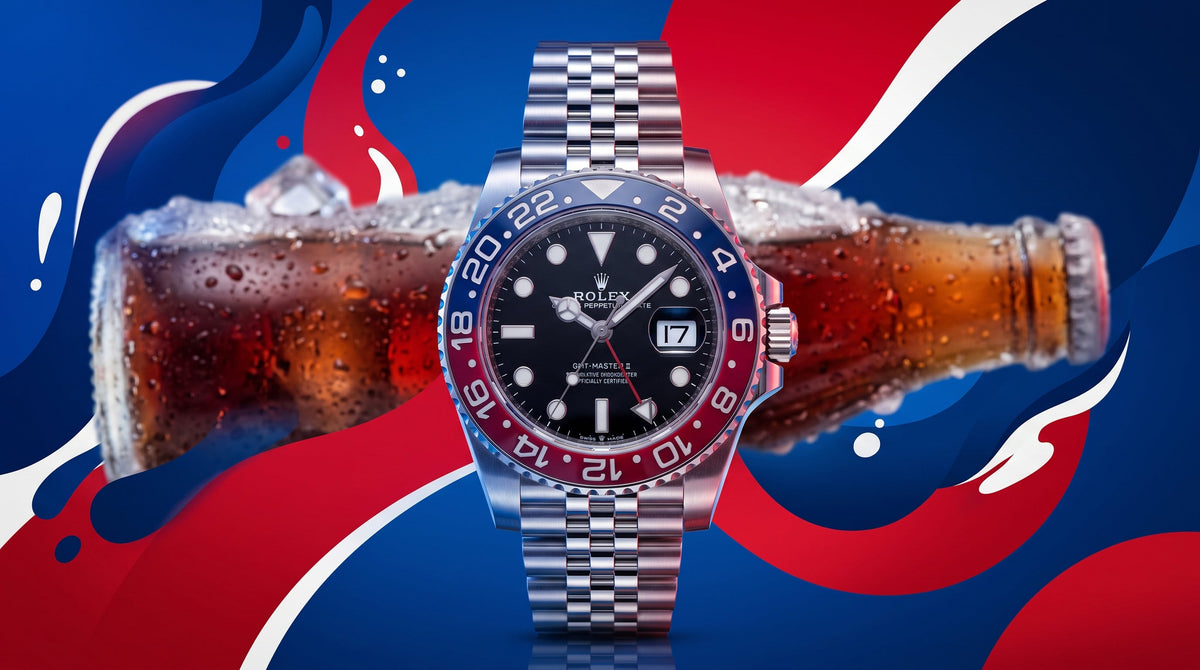
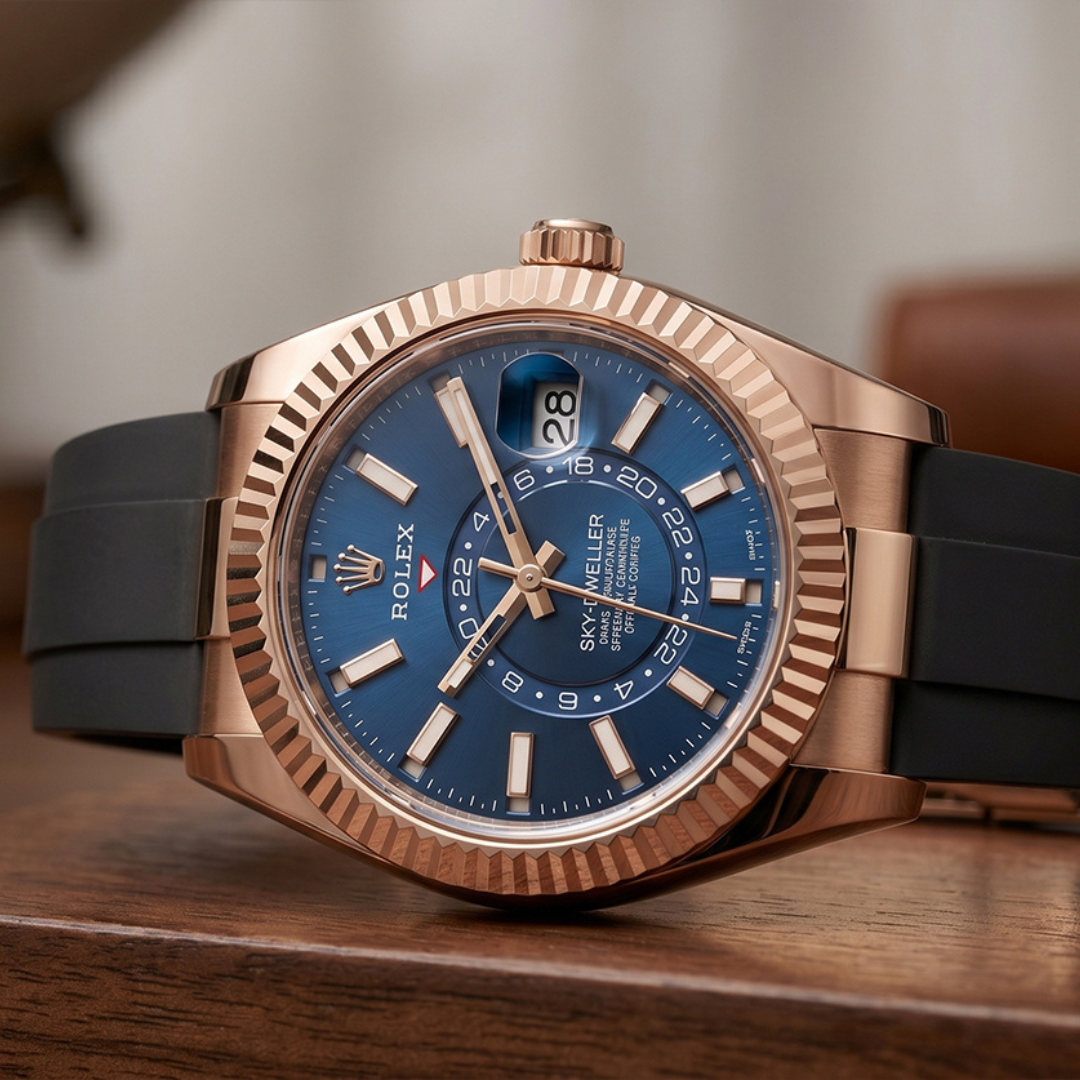
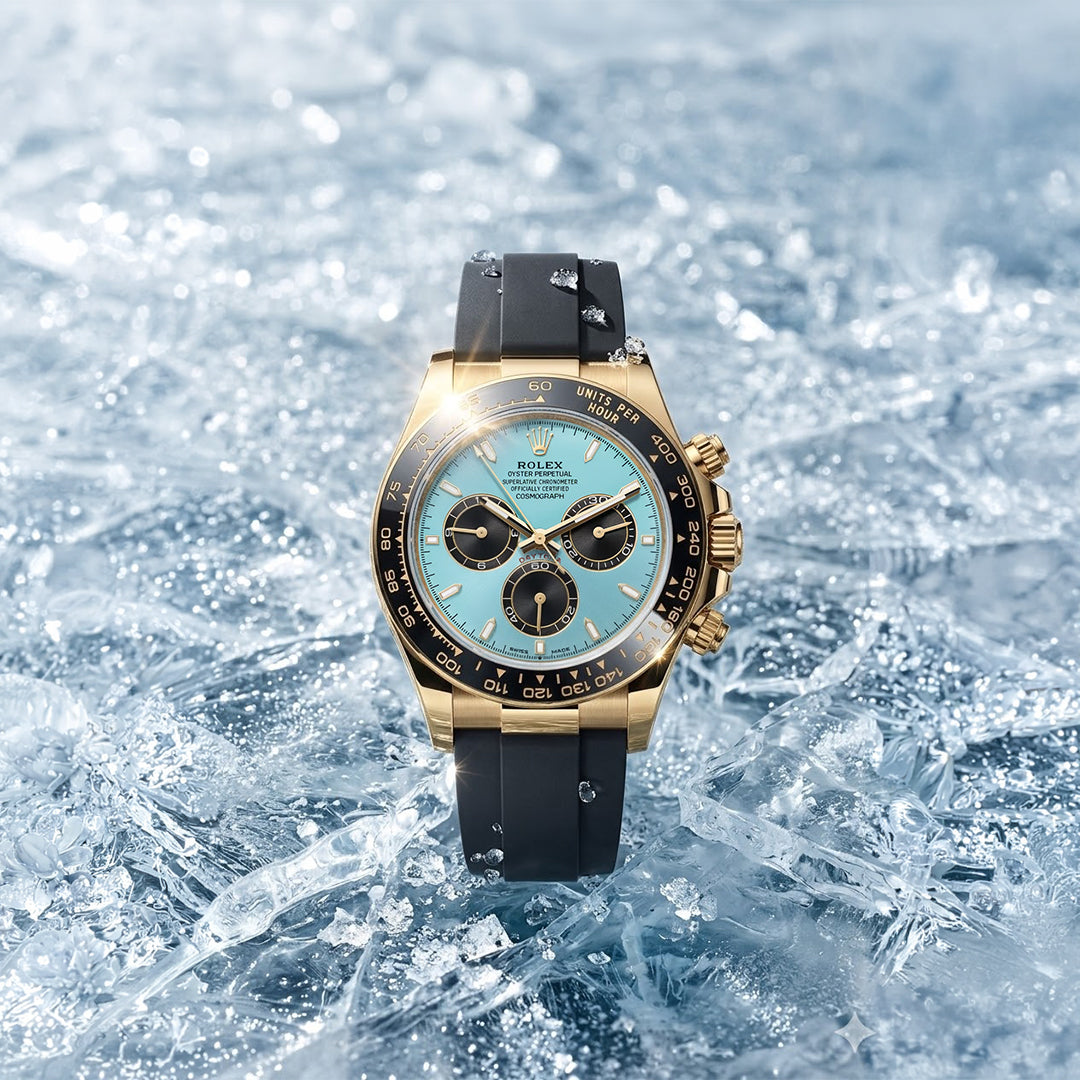
The range is focused. Sport watches (Submariner, GMT-Master II, Daytona, Explorer, Sea-Dweller, Yacht-Master, Sky-Dweller) and dress watches (Datejust, Day-Date, 1908). Each collection has a clear purpose, and Rolex rarely strays from its established templates. The result is a catalogue that feels coherent, confident, and unmistakably Rolex.
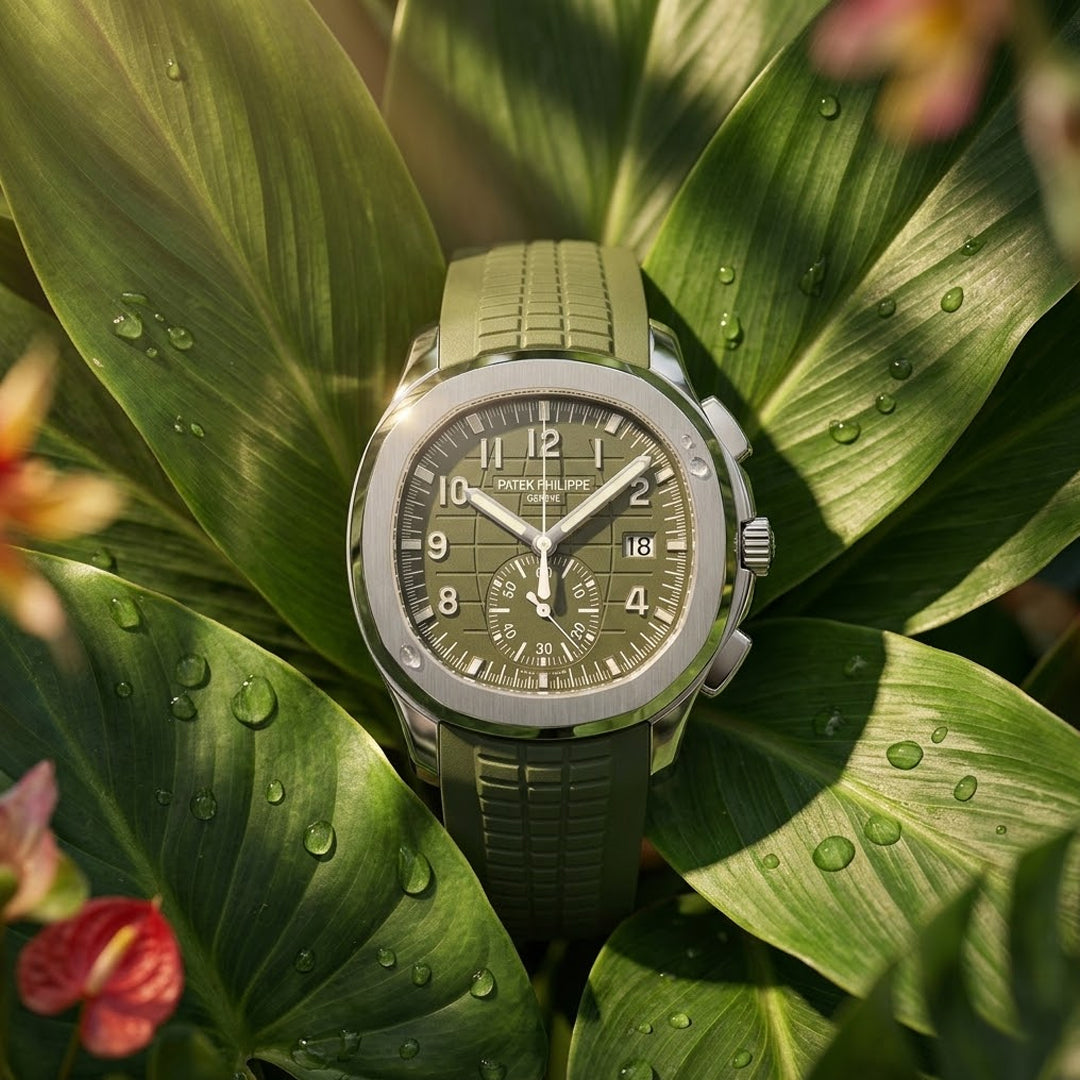
Patek Philippe’s design range is broader. The Nautilus and Aquanaut cover luxury sport. The Calatrava is the definitive round dress watch. The Complications and Grand Complications families house some of the most intricate mechanisms in all of watchmaking: perpetual calendars, minute repeaters, split-seconds chronographs, tourbillons. And then there’s the Cubitus, Patek’s newest collection, pushing the brand into contemporary territory with a square case.
Rolex gives you a focused menu executed to perfection. Patek gives you a broader conversation about what watchmaking can achieve. Both are compelling, depending on what you’re looking for.
The Sports Watch Showdown: Submariner vs. Nautilus
This is the comparison most people are really asking about, so let’s address it directly.
The Rolex Submariner is a 41mm dive watch rated to 300 meters, with a unidirectional rotating bezel, luminous markers, and a calibre 3230 or 3235 delivering a 70-hour power reserve. It’s a genuine tool watch that happens to look exceptional. It will survive anything you throw at it.

The Patek Philippe Nautilus (currently the 5811 in white gold) is a 41mm luxury sports watch rated to 120 meters, with the iconic porthole case designed by Gerald Genta, a horizontally embossed dial, and an integrated bracelet. It’s a design icon that happens to house one of the finest movements in the world.
The Submariner is more robust. The Nautilus is more refined. The Submariner costs a fraction of the Nautilus at retail. The Nautilus commands a secondary market premium that dwarfs anything in the Rolex catalogue. Both are legendary. The question is whether you want a tool that transcends its function or a work of art that functions as a tool.
Price and Accessibility
This is where the two brands diverge most dramatically. Rolex’s entry point (the Oyster Perpetual) sits around $6,000 to $7,000 at retail. The Submariner is around $10,000 to $11,000. Even the Daytona, at roughly $15,000 retail, is within reach for a serious buyer willing to navigate the waitlist or secondary market.
Patek’s entry point is significantly higher. The Calatrava starts north of $25,000. The Aquanaut sits above $30,000. The Nautilus, in white gold, is well into six figures. And many of Patek’s complication pieces stretch into the hundreds of thousands.
This isn’t a criticism of either brand. It’s a reflection of fundamentally different business models. Rolex produces roughly a million watches per year and achieves economies of scale that bring costs down. Patek produces 70,000 and invests heavily in hand-finishing that drives costs up. You get what you pay for in both cases, just in different forms.
Value Retention
Both brands hold their value exceptionally well, but the dynamics are different.
Rolex steel sport models trade at premiums above retail and have done so consistently for years. The secondary market for Rolex is the most liquid in all of luxury watches: tight spreads, high volume, and consistent demand regardless of economic conditions. If you need to sell a Rolex, you’ll find a buyer quickly and at a fair price. That liquidity is a genuine financial advantage.
Patek’s value retention is equally strong but operates differently. Key references (Nautilus, Aquanaut) command enormous premiums. Complicated pieces hold their value over decades and frequently appreciate at auction. But the market is less liquid than Rolex’s. Fewer watches change hands, and the buyer pool is smaller and more specialized. When a Patek sells well, it sells spectacularly. But the transaction requires a more knowledgeable market.
Both brands are among the safest places to put money in the luxury goods world. Rolex offers broader liquidity. Patek offers deeper long-term appreciation on key references.
So, Which One?
If you want a watch that’s universally recognized, mechanically bulletproof, accessible at multiple price points, and backed by the most liquid secondary market in watchmaking, Rolex is the answer. It does what it does better than anyone.
If you want a watch that represents the pinnacle of hand-finishing, carries generational prestige, and connects you to nearly two centuries of independent, family-owned watchmaking at the highest level, Patek Philippe is extraordinary.
My honest take: if you’re buying your first serious watch, start with Rolex. The value proposition is unmatched, and you’ll learn what you love about mechanical watches in the process. When you’re ready to go deeper, Patek will be there. And when you get there, you’ll understand why people who own both never sell either.
We carry both Rolex and Patek Philippe across a wide range of references. Browse the collections or request a specific reference.