
One was born in a Parisian jewelry house. The other was built to survive the ocean floor. Here’s why comparing them misses the point, and why you might want both.
This comparison shouldn’t work. Cartier is a jeweler that’s been making watches since 1904. Rolex is a watchmaker that’s been making tools since 1926. Their histories, their design languages, their entire reasons for existing are fundamentally different. And yet, when someone is ready to spend serious money on their first (or next) luxury watch, these are the two names that come up more than almost any others.
I’ve spent real time with both. I’ve worn a Santos for a week straight and a Submariner for a month. I’ve stood in front of a display case trying to choose between a Tank and a Datejust. And what I’ve come to believe is that the question isn’t which brand is better. It’s which philosophy matches the way you actually live.
Design Philosophy: Art vs. Engineering
Cartier designs watches the way an architect designs buildings. Shape comes first. The Santos is a square with exposed screws and visible structure. The Tank is a rectangle inspired by the profile of a Renault tank from the Western Front. The Ballon Bleu is a perfect circle with a cabochon-set crown that sits flush with the case. Every Cartier watch starts with a visual idea, and the movement exists to serve that idea.
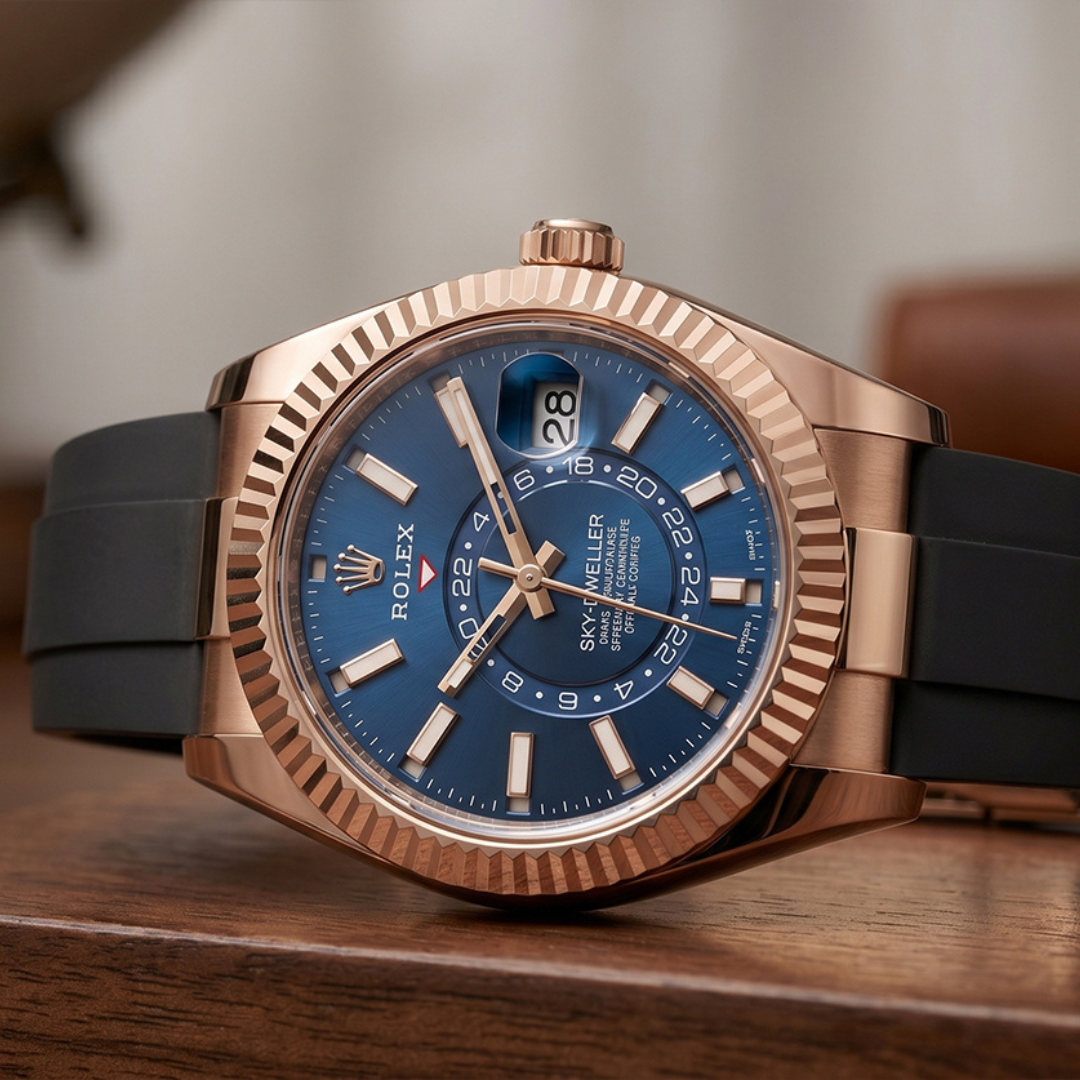
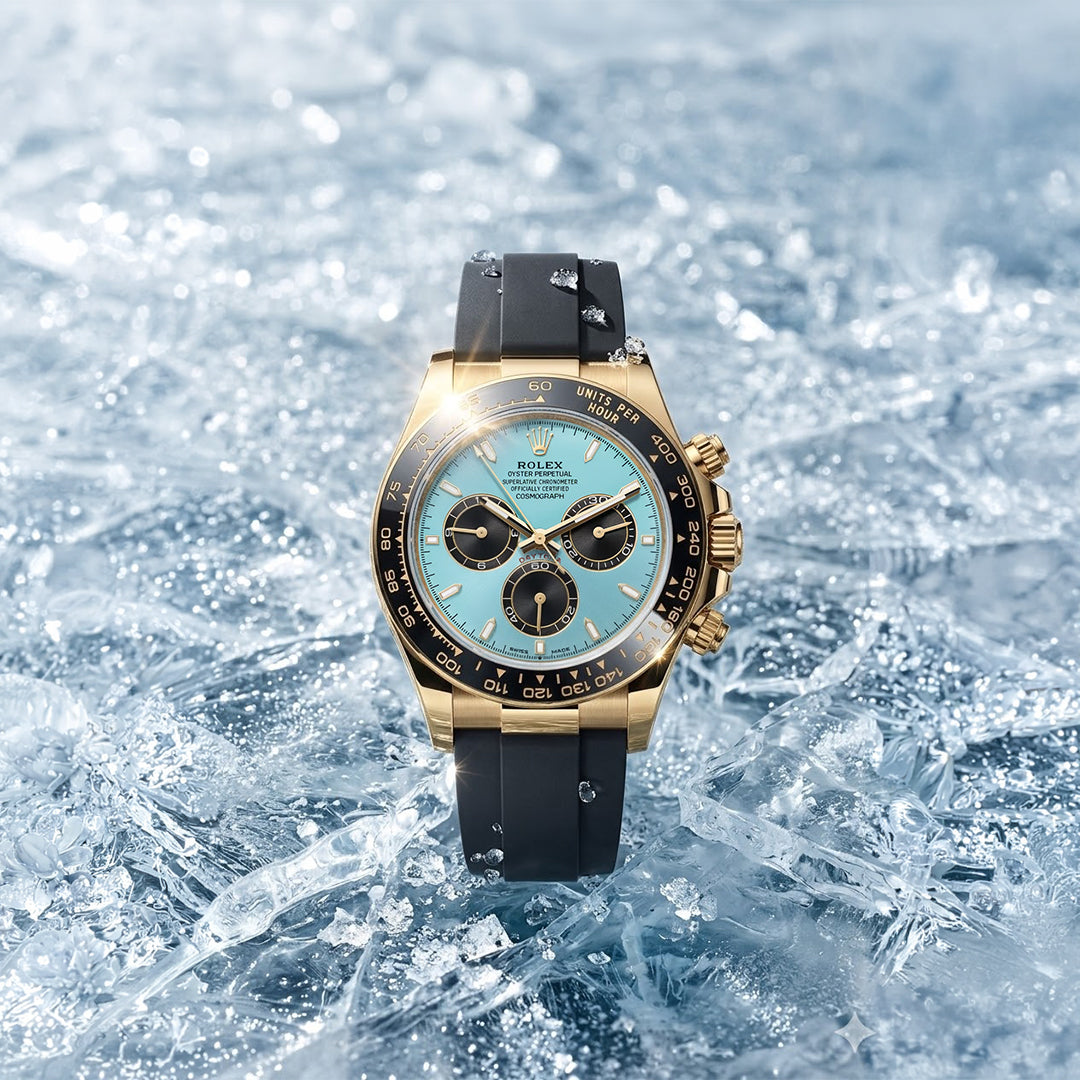
Rolex designs watches the way an engineer designs instruments. Function comes first. The Submariner exists because divers needed a waterproof watch with a rotating bezel. The GMT-Master exists because pilots needed to track two time zones. The Daytona exists because racing drivers needed a tachymeter chronograph. The design language (the Oyster case, the Mercedes hands, the Cyclops lens) evolved to support those functions, and the beauty of a Rolex is inseparable from its utility.
Neither approach is superior. But they produce watches that feel completely different on the wrist. A Cartier feels like jewelry with a movement inside it. A Rolex feels like a precision instrument that happens to look exceptional. If you respond to one more than the other, that tells you something important about yourself.
Movements: Different Priorities
Rolex manufactures every component of its movements in-house, from the hairspring to the escapement to the oscillating weight. The brand’s current generation of calibres (3200 series, 4100 series) offer 70-plus hour power reserves, the Chronergy escapement for improved efficiency, and the Parachrom hairspring for antimagnetic resistance. Every Rolex carries the
Superlative Chronometer certification, guaranteeing accuracy to +2/-2 seconds per day. The movements are robust, overbuilt, and designed to run reliably for decades between services.

Cartier takes a different approach. The brand produces in-house movements for its core collections (the calibre 1847 MC in the Santos, various manufacture calibres in the Tank and Drive lines) but doesn’t chase the same specifications-driven narrative that Rolex does. You won’t hear Cartier marketing its power reserve numbers or its accuracy tolerances with the same intensity. The movements are well-finished, reliable, and entirely fit for purpose, but Cartier’s identity has never rested on horological one-upmanship. It rests on design.
For some buyers, that distinction matters enormously. For others, it doesn’t matter at all. If you want to geek out over escapement architecture and power reserve improvements, Rolex feeds that appetite better. If you want a watch where the movement is excellent but the conversation is about form, proportion, and wrist presence, Cartier delivers.
Build Quality and Wearability
Both brands build watches to last. But they prioritize different aspects of the wearing experience.
Rolex cases are milled from solid blocks of Oystersteel (904L stainless steel), a corrosion-resistant alloy that’s harder and more lustrous than the 316L steel used by most competitors. The Oyster case is waterproof, the Twinlock and Triplock crown systems are engineered for reliability, and every component is designed to survive real-world abuse. A Rolex will take a knock and keep running. That’s not marketing. That’s sixty years of professional divers, pilots, and explorers proving it.
Cartier’s build quality is excellent, but it’s optimized for elegance rather than endurance. The Santos at 100 metres water resistance is the most robust watch in the Cartier lineup, and it genuinely holds its own against any steel sports watch on the market. The Tank, at 30 metres, is splash-proof at best. That’s not a flaw. It’s a reflection of what the watch is designed for. Nobody is taking a Tank Française diving, and Cartier doesn’t pretend otherwise.
The SmartLink bracelet system on the Santos is, in my experience, the best quick-adjustment mechanism in the industry. Rolex’s Oysterclasp with the Easylink extension offers about 5mm of on-the-fly adjustment, which is practical but limited. Cartier’s system lets you add or remove full links without tools, in seconds. For daily comfort, that’s a meaningful advantage.
Pricing and Value
This is where the conversation gets interesting, because the two brands occupy very different positions on the price spectrum.
A Cartier Santos medium in stainless steel retails under $10,000. A Rolex Submariner retails around $10,000 to $11,000, though good luck finding one at that price on the secondary market. A Cartier Tank Must starts even lower. A Rolex Datejust 36, Rolex’s most comparable everyday
watch, sits in a similar retail bracket to the Santos but trades above retail on the secondary market for popular configurations.

The secondary market dynamics are where Rolex pulls ahead decisively. Rolex sport watches (Submariner, Daytona, GMT-Master II) hold their value exceptionally well and frequently trade above retail. Cartier watches have historically softened from retail on the secondary market, though that trend is shifting. Santos and Tank references have shown steadily improving resale values over the past two years, driven by growing demand and a broader cultural recognition of Cartier’s design heritage.
If secondary market performance is a primary factor, Rolex is the safer bet today. But if you’re buying to wear and enjoy, Cartier offers extraordinary design, genuine heritage, and in-house movements at price points that make Rolex’s current market premiums look steep by comparison.
Cultural Weight
Both brands carry enormous cultural significance, but they carry it differently.
Rolex is universal. It’s the watch that transcends subcultures. A Submariner means something to a Wall Street trader, a hip-hop artist, a retired military officer, and a college graduate who just landed their first serious job. Rolex’s cultural reach is arguably the broadest of any luxury brand in any category, and that ubiquity is both its greatest strength and, for some buyers, its limitation. When everyone recognizes what’s on your wrist, the watch becomes a statement whether you intended it to be or not.
Cartier operates in a different register. It carries the weight of Parisian haute joaillerie, of early aviation, of a design tradition that predates the wristwatch itself. A Santos or a Tank signals taste rather than status. It says something about aesthetic confidence rather than financial achievement. That distinction is subtle, and it matters to the people who feel it.
So, Which One?
If you want a watch that’s engineered to survive anything, holds its value like a savings account, and carries instant recognition anywhere on earth, Rolex is the answer. It does what it does better than anyone.
If you want a watch that leads with design, offers one of the richest aesthetic heritages in all of horology, and sits at a price point that gives you extraordinary craft for the money, Cartier deserves serious consideration. It’s been making exceptional watches for over a century, and the market is only just starting to price that in.
My honest take? The best collections I’ve seen have both. A Submariner or GMT for the days when you want a tool on your wrist, and a Santos or Tank for the days when you want
something that speaks a completely different language. They don’t compete with each other. They complete each other.
We carry both Rolex and Cartier across a wide range of references. Call or text us for pricing today. We can have one of these watches on your wrist within 48-72 hours. You can reach us at 720-924-7575.