
He didn't just run a watch company. He saved mechanical watchmaking, built its greatest museum, and ensured the family name would outlast us all.
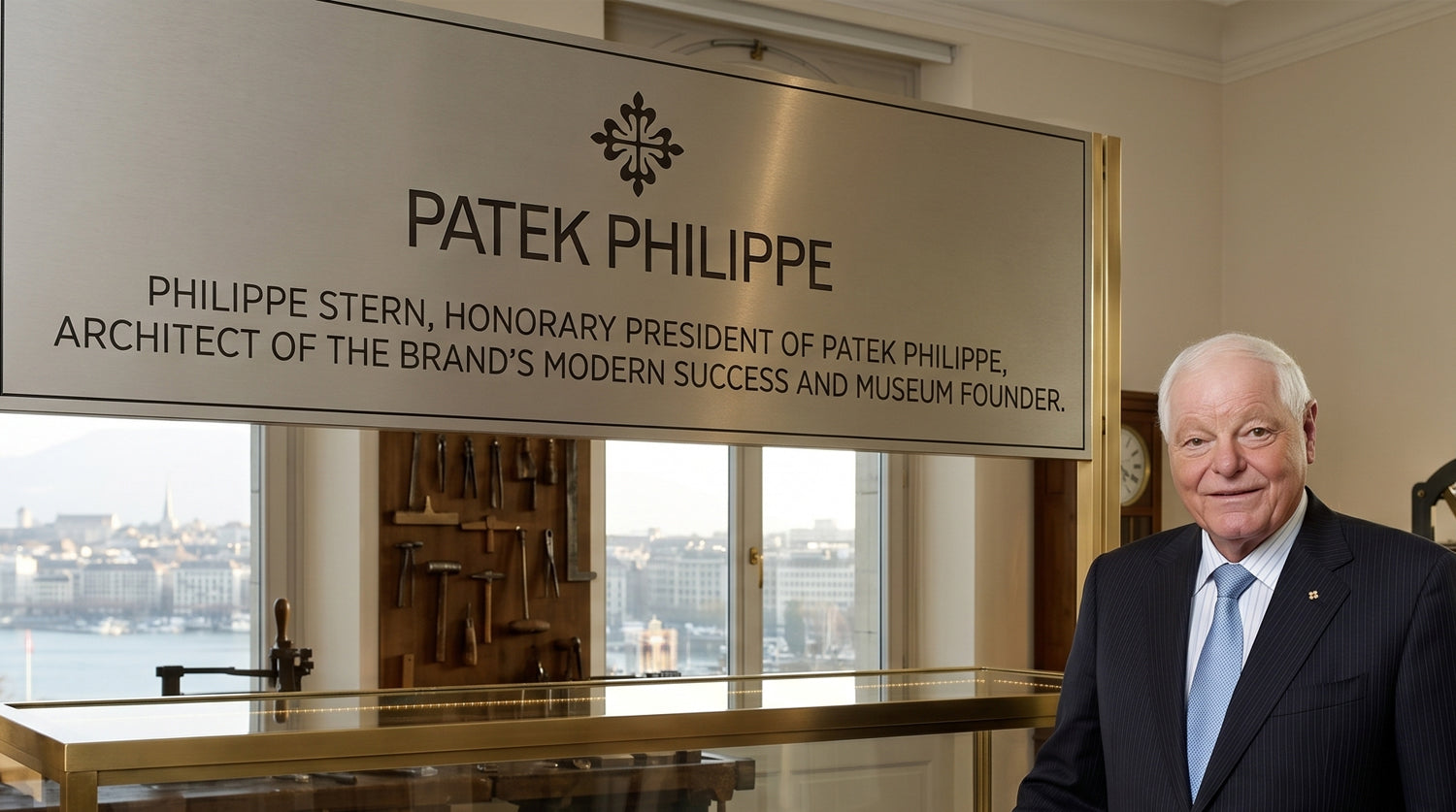
I was sitting at my desk on Sunday night when the news came through. Philippe Stern, Honorary President of Patek Philippe, had passed away in Geneva. He was 88 years old.
There are certain figures in watchmaking whose contributions are so foundational that you stop seeing them. They become part of the architecture. Philippe Stern is one of those figures. And now that he's gone, it feels important to talk about what he actually did, because the full scope of it is staggering.
Born Into It, But He Earned It
Philippe Stern was born in Geneva in 1938. His grandfather, Charles Stern, along with Charles's brother Jean, had acquired Patek Philippe in 1932 through their dial-making company, Cadrans Stern Frères. His father, Henri Stern, ran the company for decades. Philippe grew up surrounded by watchmaking, but he didn't walk straight into the corner office. He studied economics and commerce, then spent time in New York during the 1960s working for the Henri Stern Watch Agency, learning the American market from the ground up.
He joined Patek Philippe formally in 1963 and became General Director in 1977. He was appointed President in 1993, a role he held until 2009 when he handed the reins to his son, Thierry Stern. After that, he served as Honorary President until his death.
Those are the dates. They don't tell you much. The story is in what happened between them.
The Quartz Crisis and the Decision That Changed Everything
When Philippe Stern took on greater responsibility at Patek Philippe in the late 1970s, the Swiss watch industry was in genuine existential crisis. Japanese quartz movements were cheaper, more accurate, and threatening to make mechanical watchmaking obsolete. Factories were closing. Skilled craftsmen were leaving the trade. The conventional wisdom was that mechanical watches were finished.
Stern didn't believe that. While other manufactures were scrambling to adopt quartz or cutting costs to survive, he doubled down on mechanical watchmaking. He invested in movement development, in finishing, in complications. He bet the company's future on the idea that there would always be a market for watches made by human hands to the highest possible standard.
That bet defined everything that followed. Without Philippe Stern's conviction during the darkest years of the quartz crisis, the Patek Philippe we know today simply would not exist.
The Nautilus, the Calibre 89, and the Grandmaster Chime
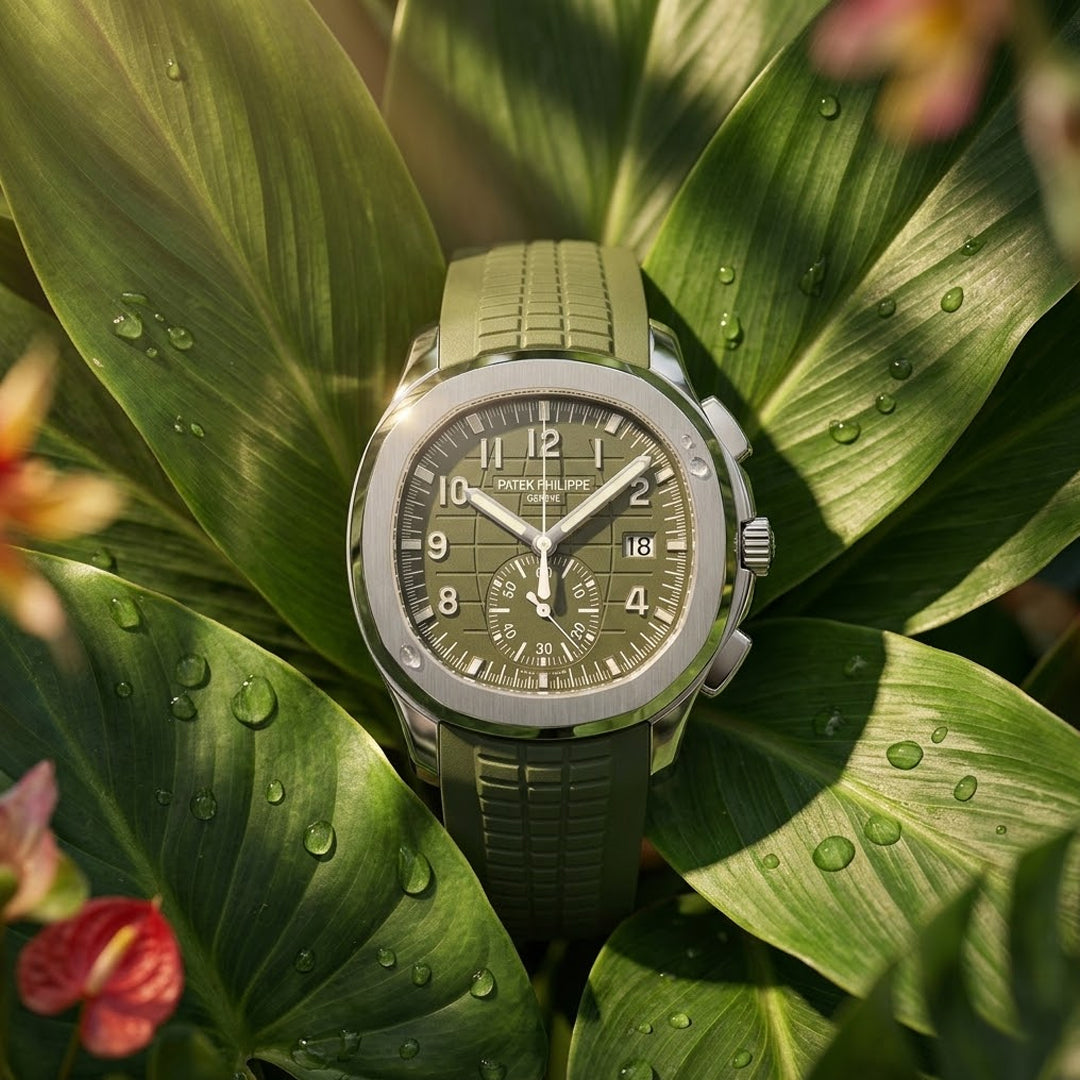
Stern's tenure touched virtually every significant Patek Philippe creation of the modern era. The Nautilus, launched in 1976 under his watch (literally and figuratively), became one of the most iconic watches ever made. The Calibre 89, unveiled for Patek's 150th anniversary in 1989, was at the time the most complicated mechanical timepiece in the world, with 33 complications packed into a single pocket watch. It was a statement of intent: Patek Philippe was not retreating from mechanical complexity. It was advancing into it.

The Grandmaster Chime, ref. 6300, arrived in 2014 for the 175th anniversary and took the Calibre 89's legacy even further with 20 complications in a wristwatch. A unique steel version sold at the Only Watch charity auction in 2019 for CHF 31 million, setting a world record for the most expensive wristwatch ever sold at auction. That record still stands.
These weren't just products. They were declarations. Each one said the same thing: Patek Philippe watches exist to push the boundaries of what a mechanical watch can achieve, and it will never stop doing so. That philosophy came directly from Philippe Stern.
The Museum
In 2001, Stern opened the Patek Philippe Museum in Geneva's Plainpalais district. It houses one of the most extraordinary collections of horological artifacts in the world, spanning five centuries of watchmaking history. The collection isn't limited to Patek Philippe pieces. It includes timepieces from across the entire history of the craft, from 16th-century table clocks to some of the most important pocket watches ever made.
Building a museum of that scope was a deeply personal project for Stern. He was a collector himself, and he understood that preserving the history of watchmaking wasn't just a nice gesture. It was essential. Without institutional memory, without a tangible connection to the craft's past, the art would eventually lose its meaning. The museum ensures that doesn't happen.
If you ever find yourself in Geneva, it's one of the most moving experiences you can have as a watch enthusiast. That's Philippe Stern's gift to the industry.
The Patek Philippe Seal
In 2009, the same year he handed the presidency to Thierry, Philippe Stern formalized something that had been implicit at Patek for decades: the Patek Philippe Seal. This replaced the Geneva Seal as the brand's quality standard, establishing a set of criteria that exceeded any existing industry certification. It governs not just movement finishing but the entire watch, including the case, dial, and long-term functional reliability.

It was a characteristically Stern move. Rather than rely on an external standard that other brands also used, he created one that was uniquely Patek Philippe's own, set higher than anything else available, and applied it across every watch the company produced. It was a way of saying: we hold ourselves to a standard that nobody else can certify, because nobody else operates at this level.
Independence Above All
Perhaps the most significant thing Philippe Stern did was something he chose not to do. He never sold the company. During his tenure, virtually every other major Swiss watch brand was absorbed into one of the big luxury conglomerates: Swatch Group, Richemont, LVMH. The pressure to consolidate was enormous. The financial incentives were staggering.
Stern said no. Repeatedly. He believed that Patek Philippe's identity, its ability to make decisions based on craft rather than quarterly earnings, depended on remaining family-owned. That conviction is the reason Patek Philippe is still independent today. It's the reason Thierry Stern can make decisions about production, materials, and pricing without answering to a corporate board. It's the reason the Nautilus's 50th anniversary was celebrated with restraint rather than a mass-market cash grab.
Independence isn't just a business strategy at Patek Philippe. It's a philosophy. And that philosophy belongs to Philippe Stern.
What He Leaves Behind
A company that is universally regarded as the finest watchmaker in the world. A museum that preserves five centuries of horological history. A quality seal that sets the standard for the entire industry. A family succession that ensures continuity for at least another generation. And a proof of concept that independence, craft, and long-term thinking can triumph over scale, hype, and short-term profit.
Philippe Stern didn't make watches. He made the conditions under which the greatest watches could be made. And he ensured those conditions would endure long after him.
The watch world is smaller without him. But everything he built remains.
We carry Patek Philippe references across the full collection. Browse the Patek Philippe collection or request a specific reference.